
29 April 2025
4 min read
What actually happens during an Aira Heat Pump install?


Published on
29 April 2025
Time to read
4 minutes
Choosing to ditch your old boiler for an Aira Heat Pump is a big step. One that can lower both your carbon emissions and your energy bills.
But what actually happens when you take the leap and say “yes” to Aira?
Let’s walk through it.

Talk to a Clean Energy Expert
Before we even arrive
Every install starts long before our Aira Technicians knock on your door.
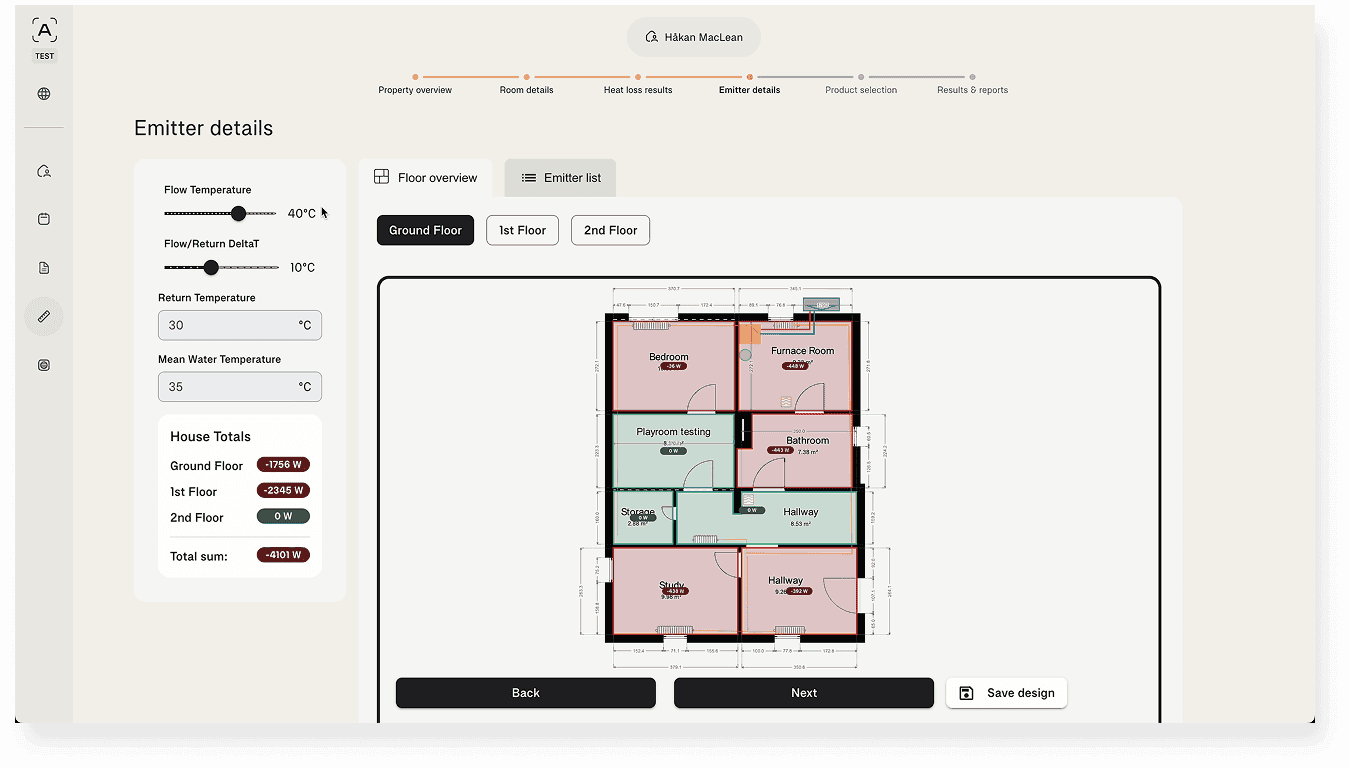
During your technical survey, we carry out a custom heat loss calculation using our bespoke software to ensure the system we’re designing is right for your home. This includes everything from the size of your radiators to flow rates, pipework requirements and where every bit of hardware will go.
All of this lives in our internal systems, so by the time your install team is assigned, they already have a full technical overview of your home.
Before the install, your lead technician will give you a quick courtesy call, just to say hello and to make sure you’re ready. They’ll also let you know if there’s anything helpful you can do, like clearing space around your radiators or outdoor unit area.
Step one: getting everything ready
The first day is all about prep.
We start by laying down protective sheeting throughout your home, keeping things clean and showing your space the respect it deserves.
Next, we check over your delivery to make sure all the components have arrived, then do a full walk-through with you. This is where we confirm where everything is going and talk through any final preferences before we lift a single tool.
Installing the hardware
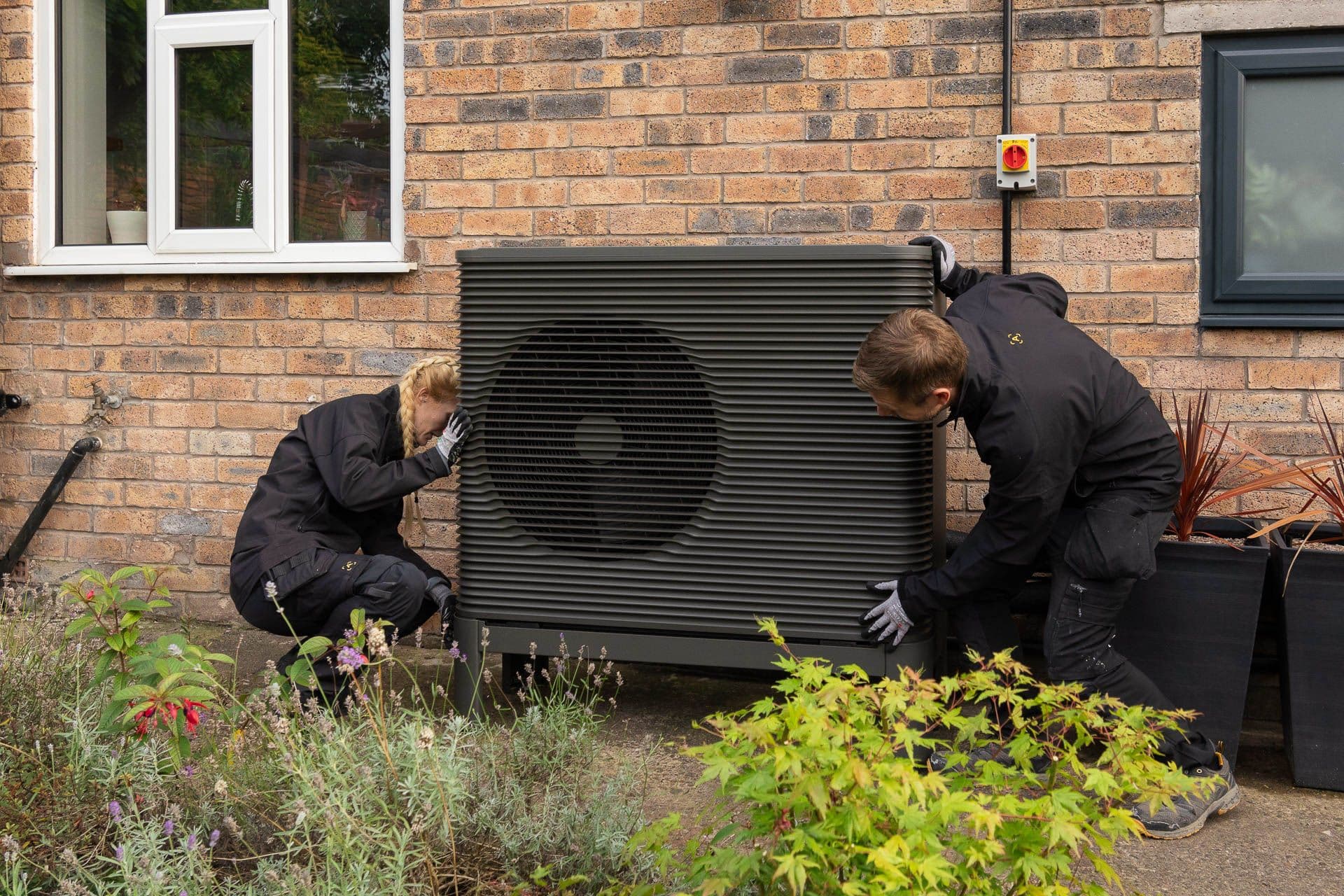
Once that’s done, we typically start with the outdoor unit. Why? Because it means we can get a big portion of the job done without touching your existing heating or hot water. That way, you’re not left without essentials for longer than necessary.
Next, we’ll get the rest of the hardware into place. The indoor unit, the buffer tank, and hot water cylinder or radiators, if needed. It’s also when we remove your old gas boiler, which we’ll recycle for you, of course.
If pipe upgrades are required to support your new heat pump, this is when they go in. Some homes need more than others, but our team is trained to make it all as smooth and tidy as possible.
By day two or three, we’re typically starting to connect the system – doing hot and cold water runs, linking up heating circuits, and checking that everything’s watertight and ready to go.
Testing and balancing
Before anything gets powered on, it gets tested. Thoroughly.
Our electricians carry out what's called “dead testing” to make sure cables are safe before they’re live. Our technicians fill the system, bleed the radiators and check everything is holding pressure. We also “balance” your heating system. This is where we make sure heat is distributed evenly across all rooms. That means no chilly corners or radiators that feel forgotten.
All of this is recorded, certified, and signed off by your lead technician.
The smart bit
Aira installs are a little different. In a good way.
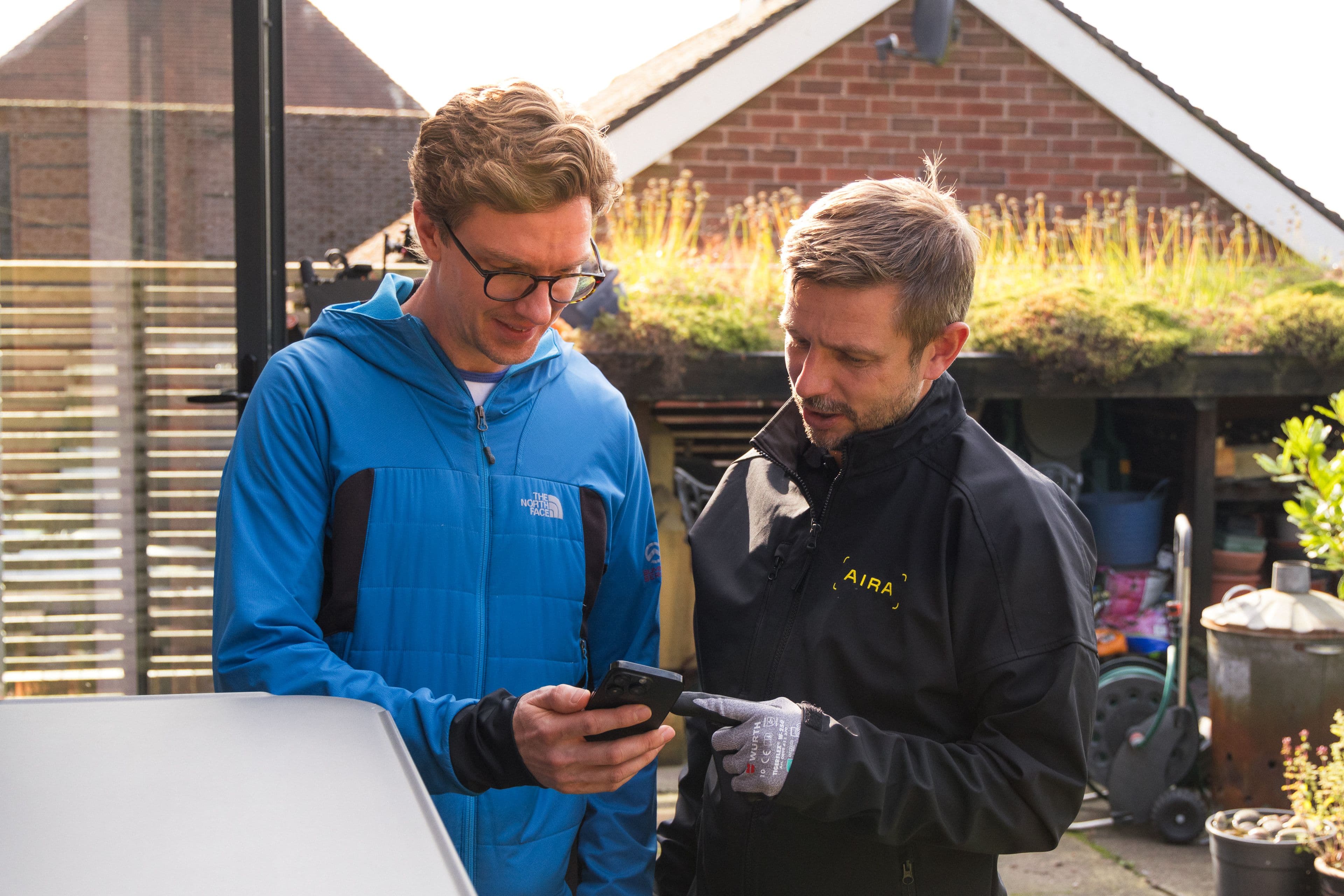
We don’t rely on a single in-home controller. Instead, our engineers connect directly to your system using our dedicated installer app. This app handles all the setup and testing: running flow tests, purging air and commissioning the unit.
Once everything checks out, the engineer completes the install within the app, which then activates your Aira Home Energy app, so you can start using your heat pump straight away. Set temperatures, adjust schedules and track usage. All in a few taps.
The handover
Once your system is fully up and running, we don’t just pack up and vanish.
We take the time to walk you through everything – how to use your new heat pump, how to set your preferences, and what to expect from your new way of heating. This is your official handover, and it’s a big deal for us. Because when we leave, we want you feeling 100% confident and in control of your heating and hot water.
Clean up and final touches
We tidy up as we go, but we always do a final once-over at the end to make sure your home is left just as we found it. Neat, tidy, and ready to enjoy cleaner, more affordable heating.
How long does it take?
Every home is different. Some installs go quicker, some take a little longer, depending on complexity. But most installs take around three to four days.
However long we expect it all to take, we always keep you in the loop and won’t rush the installation or handover. Because it’s not just about getting it done. It’s about getting it right. That way, you can enjoy peace of mind knowing your system is set up for maximum efficiency and built to last.

How do we keep installation quality high?
At Aira, we know that even the best heat pump won’t perform if it’s not installed right. That’s why every Aira Technician trains at the Aira Academy.
This hands-on approach means every Aira Heat Pump we install runs at peak performance, efficiency and reliability. All year round.
Don't just take our word for it. This is what Gareth, from Stoke, had to say about his Aira Heat Pump installation experience.
Have questions about our installation process? Just ask. Or if you’re ready to switch to an Aira Heat Pump, tell us a little about your current heating setup. We’ll crunch the numbers and give you a personalised quote.
What type of house do you live in?

Related articles

Heat pumps: The basics
2 Dec 2025
Do heat pumps work in older homes?
Thinking heat pumps are just for new builds? Think again. Many older homes can run a heat pump efficiently and affordably – cutting energy bills, reducing carbon emissions, and future-proofing your home. Just as a heat pump in a newbuild home would.

Environmental impact & efficiency
27 Dec 2024
Can a heat pump improve my home’s efficiency?
As the cost of living rises and environmental concerns grow, improving home energy efficiency is more important than ever. Heat pumps offer an efficient solution for heating and cooling your home, helping lower both utility bills and carbon emissions. Unlike traditional heating systems that produce heat, heat pumps transfer existing heat, making them significantly more efficient.
Environmental impact & efficiency
29 Jul 2024
The benefits of combining solar panels and heat pumps
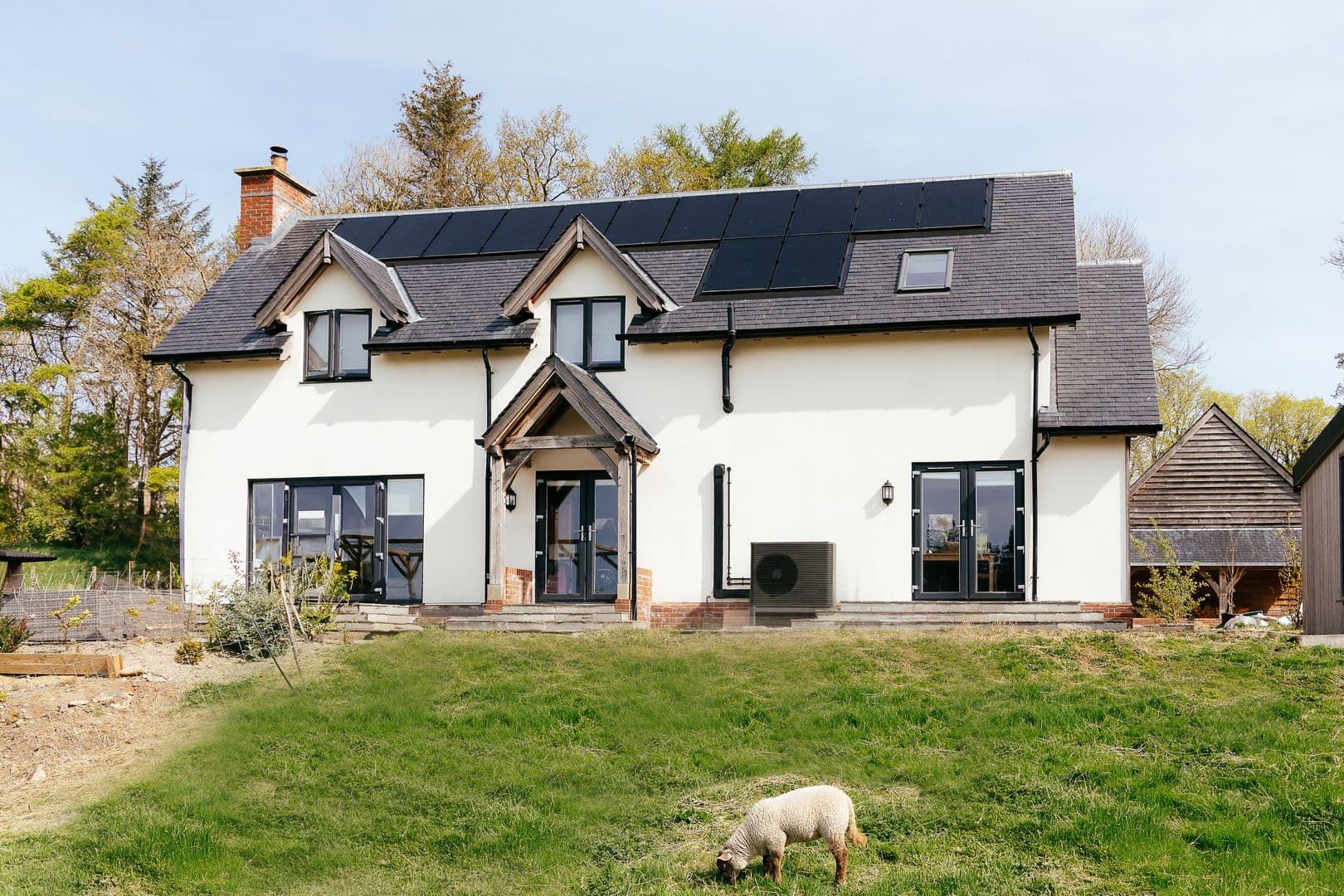
Solar panels and heat pumps are two innovative technologies helping homeowners reduce their energy costs and carbon emissions. But how do they work? And are they a match made in clean energy heaven?
Comparing options
9 Aug 2023
Types of heat pumps
Switching to a heat pump can make some significant improvements to your home, from reduced energy bills to fewer carbon emissions produced. Heat pumps are the way forward when it comes to a greener home. If you’re thinking of making the switch but aren’t sure which type of heat pump will suit your home and needs best, keep reading as we’ll explore the most popular heat pump types and their benefits.