17 December 2024
3 min read
How long does it take to install a heat pump?

Published on
17 December 2024
Time to read
3 minutes
Key takeaways:
- A typical air source heat pump installation takes two to four days
- The installation timeline can be longer or shorter depending on the needs of your property
- Major factors impacting your installation timeline can include radiator and electrical upgrades
Upgrading your home’s heating and cooling system with a heat pump is an energy-efficient investment, but how long does installation take? Typically, it lasts 2-5 days, depending on factors like property accessibility, existing ductwork, and electrical requirements. Here’s what influences the timeline and how you can prepare for a smooth process.

Talk to a Clean Energy Expert
Typical installation timeline
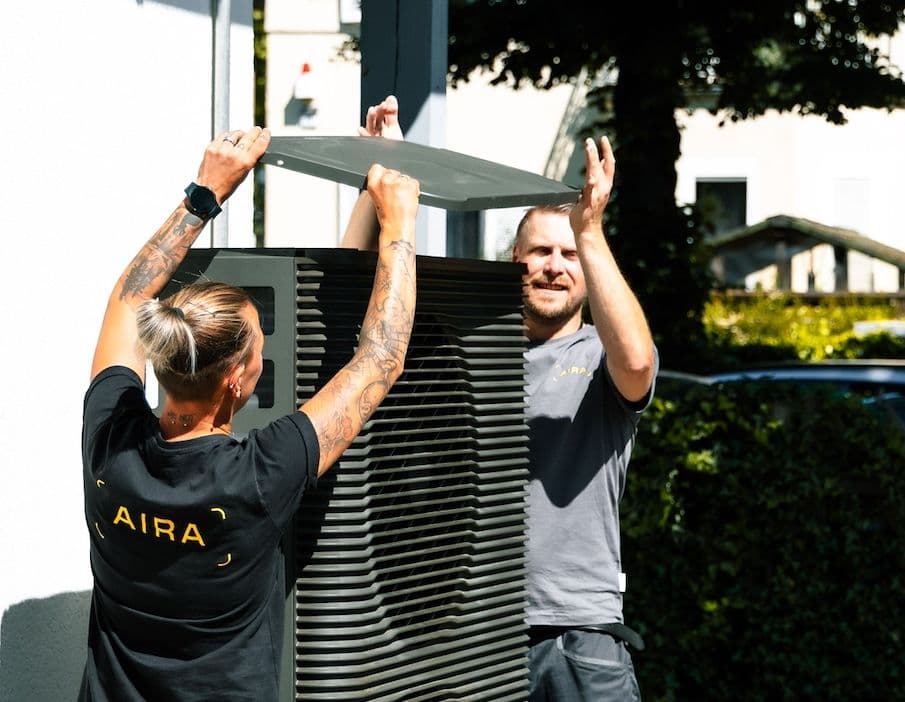
Every aspect of a heat pump installation goes more smoothly with educated and competent installers. At Aira, we train all of our installers extensively, so you can rest assured that you are in good (and efficient) hands. With Aira technicians, here’s what you can expect:
- Initial assessment and planning: Conducted by technical surveyors, this phase includes a heat loss calculation and site evaluation. Adjustments, such as insulation upgrades, may be required. You’ll also need to prepare the site for the outdoor unit by levelling the ground or choosing a composite pad.
- Old system removal: Transitioning from a gas boiler involves disconnecting and safely disposing of old components, including hazardous refrigerants. This step may take additional time but ensures a seamless shift to modern heating.
- Fitting new components: Installers place the outdoor unit, connect it to the indoor system, and integrate components like circulation pumps and control boxes. System flushing, testing, and commissioning finalise the setup, ensuring peak performance.
Weather & planning permissions
Weather can impact installation efficiency. While rain or snow requires extra precautions, skilled installers can mitigate these challenges.
Most air-source heat pumps in the UK are classified as “permitted developments,” meaning planning permissions aren’t required unless your home is listed or in a conservation area. When needed, securing permissions can take several weeks, but in those cases Aira will handle all of the planning permissions on your behalf so your switch is hassle-free.
Things to keep in mind during installation
- Radiator upgrades or replacements: Air source heat pumps operate at lower temperatures than traditional boilers, which may make existing radiators less effective at distributing heat. To maximise efficiency and comfort, you might need to install larger radiators or upgrade to low-temperature models like underfloor heating systems. This can add time and cost to the installation process but ensures the system performs optimally.
- Electrical panel upgrades: Air source heat pumps typically require a dedicated power supply, which may exceed the capacity of older electrical panels. Upgrading the panel to accommodate the additional load ensures safety and compliance with electrical codes but can extend the installation timeline.
- Wiring issues: Faulty wiring can pose risks and hinder the heat pump’s operation. Identifying and addressing these issues—whether it’s installing new wiring or repairing existing connections—requires expertise and care.
- Blown fuses or circuits: Electrical problems, such as blown fuses or tripped circuits, may occur during or after installation, especially in homes with aging electrical systems. These issues must be resolved promptly to prevent damage to the heat pump and ensure reliable operation.
These challenges highlight the importance of hiring experienced professionals for the installation. Skilled technicians can anticipate potential complications, address them efficiently, and ensure the system is installed correctly. Aira Clean Energy Technicians receive special training, so you can rest assured that your installation is being handled by pros.
Conclusion
Heat pump installation is an overall efficient process, especially when handled by trained professionals. Upgrading to a heat pump is a step toward sustainable living, reducing energy bills and your carbon footprint. By understanding the process, you can plan for a smoother upgrade to this energy-efficient technology.
What type of house do you live in?

Related articles
Comparing options
18 Sept 2026
The difference between a heat pump and an air conditioner
Heat pumps and air conditioners may look similar, but they can do very different jobs around the home. Discover how air conditioning, air-to-air and air-to-water heat pumps compare, from cooling and hot water to installation and cost.
Heat pumps: The basics
13 Aug 2026
Your rights if your heat pump installation goes wrong
Has your heat pump installation gone wrong? Or worried it will go wrong? From MCS protections to the Consumer Rights Act to what to do if your installer stops trading, here's a straightforward guide to your rights and the steps you should take.
Heat pumps: The basics
4 Aug 2026
What a good heat pump installation actually looks like
A good heat pump installation is about much more than fitting an outdoor unit and connecting a few pipes. Here’s how to judge the survey, system design, workmanship, commissioning and aftercare – plus the red flags to look out for.
Solar & battery
19 Jun 2026
Solar panel cost UK: how much are solar panels in 2026?
Solar panels can significantly reduce how much electricity you buy from the grid, but how much do they actually cost? Discover average UK solar panel installation prices in 2026, what affects the final cost and whether adding battery storage is worth it.
Costs & benefits
22 Apr 2025
Heat pump cashback: which banks offer up to £2,000 and how to claim it.
If you're a homeowner looking to upgrade their heating by ditching their boiler for a heat pump, the good news is you might be eligible for more financial help beyond the government grant. Some of the UK’s biggest banks now offer cashback, green finance and mortgage schemes to help cover the cost of a heat pump installation.
Performance & reliability
29 Oct 2024
How long does a heat pump last?
There are a range of factors that impact how long a heat pump lasts. From the quality of installation to maintenance and general upkeep, let’s get into them.