
13 April 2026
8 min read
Heat pump quotes: what to look for (and what to avoid)

Updated on
13 April 2026
Time to read
8 minutes
Key takeaways
- A heat pump quote should include a full heat loss calculation, system design details (including flow temperature), all installation work and materials, smart controls, commissioning, and clear warranty and aftercare support.
- The cheapest quote isn’t always the best. A well-designed system will deliver better comfort, efficiency, and lower running costs over time.
- Always choose an MCS-certified installer to ensure your system meets UK standards and qualifies for the £7,500 Boiler Upgrade Scheme.
Getting a heat pump quote should feel simple. But for most homeowners, it quickly becomes confusing.
Prices vary wildly. Technical terms get thrown around. And it’s not always clear what’s actually included.
The reality is that a heat pump is only as good as the system design and installation behind it. So instead of comparing quotes line by line, you need to understand what should be there in the first place.
This guide will help you do exactly that – so you can choose confidently and avoid costly mistakes.

Talk to a Clean Energy Expert
Why your heat pump quote matters more than you think
A heat pump isn’t a plug-and-play appliance. It’s a system that needs to be designed specifically for your home.
That’s why quotes can vary so much, and why simply choosing the cheapest option can lead to problems later on.
The performance of an air-to-water heat pump depends on how well it’s been designed and installed. Get it right, and you’ll have a home that feels consistently warm, with lower running costs and reliable hot water. Get it wrong, and you could end up with cold rooms, higher energy bills, and a system that never quite performs as expected.
This is why comparing quotes isn’t really about price. It’s about understanding what’s behind it.
How much should a heat pump quote cost?
One of the biggest questions homeowners have is: what should a heat pump quote actually look like in terms of price?
In the UK, most air-to-water heat pump systems typically range from £7,000 to £13,000 after the £7,500 Boiler Upgrade Scheme grant has been applied. But this can vary depending on your home, the system design, and what’s included in the installation.
That’s why it’s so important to look beyond the headline price. Two quotes might look similar on the surface, but include very different levels of detail, equipment, or support.
Want to get an idea of how much an Aira Heat Pump might cost? Use our heat pump calculator.
Make sure your installer is MCS-certified
In the UK, your installer must be certified under the Microgeneration Certification Scheme (MCS) for you to qualify for the £7,500 Boiler Upgrade Scheme and the Home Energy Scotland Grant & Loan.
MCS certification also ensures the system is designed and installed to recognised standards, giving you confidence that your heat pump will perform as expected.
It’s also worth looking for additional trust signals, such as independent accreditations or memberships. For example, being approved by organisations like Which? Trusted Traders can provide extra reassurance that the installer meets high standards for quality and customer service. Learn more about what using a Which? Trusted Trader means for you.

What should be included in a heat pump quote?
A good heat pump quote should give you complete clarity. Not just a number at the bottom of the page, but a clear explanation of how your system will be designed, installed, and supported over time.
Here’s what that looks like in practice.
1. A proper heat loss calculation (non-negotiable)
Everything starts here.
A professional installer should carry out a room-by-room heat loss calculation to understand how much heat your home actually needs. This takes into account insulation, windows, room sizes, and how heat moves through your space.
Without this, the system can easily be:
- undersized, leaving rooms cold
- oversized, leading to higher running costs
At Aira, every system is designed using our own software, so it’s tailored precisely to your home.
2. Clear system design – not just a product
A quote shouldn’t just tell you what you’re buying. It should explain how your system will work.
That includes:
- the heat pump size (kW output)
- system type (air-to-water)
- hot water cylinder size
- and importantly, the flow temperature
Flow temperature is one of the biggest drivers of efficiency. Lower flow temperatures mean better performance and lower running costs – so if it’s not mentioned, that’s a red flag.
3. Radiators, pipework, and upgrades
Because heat pumps run at lower temperatures than boilers, your existing system needs to be assessed properly.
Your quote should explain whether:
- your current radiators are suitable
- any need upgrading
- pipework changes are required
If this isn’t covered upfront, this can lead to unexpected costs later on.
4. Full installation scope
A proper quote should include everything needed to get your system running.
That means:
- indoor and outdoor units
- hot water cylinder
- pipework and connections
- electrical work
- removal of your old boiler
If something is missing or unclear, ask.
5. Smart controls and optimisation
Modern heat pumps aren’t just about hardware – they’re intelligent systems designed to run efficiently in the background.
A good quote should explain how you’ll control and optimise your heating. That usually includes smart controls, app access, and the ability to set heating schedules that suit your lifestyle.
These systems don’t just make things more convenient. They help your heat pump run at the right times, maintain a steady temperature, and avoid unnecessary energy use.
If this isn’t mentioned, it could be that your heat pump doesn’t have any of these features.
6. Commissioning, testing and handover
Installation isn’t finished when the hardware is in place.
Before your system is signed off, it should be properly tested, configured, and balanced to make sure everything is working as it should. This includes checking system pressure, removing air from radiators, and ensuring heat is distributed evenly throughout your home.
Just as importantly, your installer should take the time to walk you through how everything works – from setting temperatures to understanding your hot water.
It might sound small, but this is often the difference between a system that feels confusing and one that just works.
7. Warranty and aftercare
A heat pump is a long-term investment, so it’s important to understand what support you’ll have after installation.
Your quote should clearly explain what’s covered – both for the product itself and the installation work. It should also outline what happens if something goes wrong, and what kind of ongoing support is available.
Strong aftercare isn’t just about fixing issues. It’s about making sure your system continues to perform as it should, year after year. That’s why we offer our 15-Year Aira Guarantee.

Red flags to watch out for
Not all quotes are created equal. In fact, some of the biggest issues come from what’s missing. A heat pump is a long-term investment, so it’s worth slowing down and getting this part right.
Here are the most common red flags to look out for.
1. No home assessment
If no one has visited your home, the quote is likely based on assumptions rather than real data.
Every home is different. So, without a proper survey and heat loss calculation, it’s impossible to design a system that will perform properly.
But there’s one sensible exception: a home being renovated. Assessing it as it stands won’t tell you how much heat it’ll lose once the new walls, windows and insulation are in place.
In that case, the installer can carry out a video home energy assessment and use your renovation plans to understand the finished home. What matters is that the system is designed around the home you’ll actually be heating.
2. Vague or generic descriptions
If a quote refers to “standard installation” or doesn’t clearly explain the system design, it’s difficult to know what you’re actually getting.
You should always see clear details on system sizing, components, and how your home will be heated.
3. An unusually low price
If one quote is significantly cheaper than the rest, it’s worth digging deeper.
Lower prices often mean something hasn’t been included – whether that’s radiator upgrades, electrical work, proper commissioning or installation as a whole. These costs tend to appear later.
4. No mention of flow temperature or system design
Flow temperature plays a huge role in how efficient your heat pump will be.
If it’s not mentioned at all, it’s a sign the system may not have been properly designed.
5. Pressure to sign quickly
Be cautious of “limited-time offers” or pressure to commit and pay for the whole system on the spot.
A heat pump is a long-term investment. You should have the time to fully understand what’s being proposed before making a decision.
6. Unclear warranty or aftercare
If it’s not obvious what happens after installation, that’s a risk.
You should always know what’s covered, how long for, and what support is available if something goes wrong.
Questions to ask before you decide
Once you’ve got a quote in front of you, it’s worth asking a few simple questions to understand how well it’s been put together.
You don’t need to be technical. A good installer should be able to explain everything clearly.
Here are some of the most important ones:
- Have you carried out a full heat loss calculation for my home?
- What size heat pump are you recommending — and why
- What flow temperature is the system designed to run at?
- Will any radiators or pipework need upgrading?
- What exactly is included in the installation?
- Who will carry out the work — your own engineers or subcontractors?
- What warranty and aftercare do you provide?
- What ongoing servicing or maintenance is recommended?
- Is the system designed to work with solar panels or other technologies?
A reputable installer won’t just answer these – they’ll walk you through them in a way that makes sense.
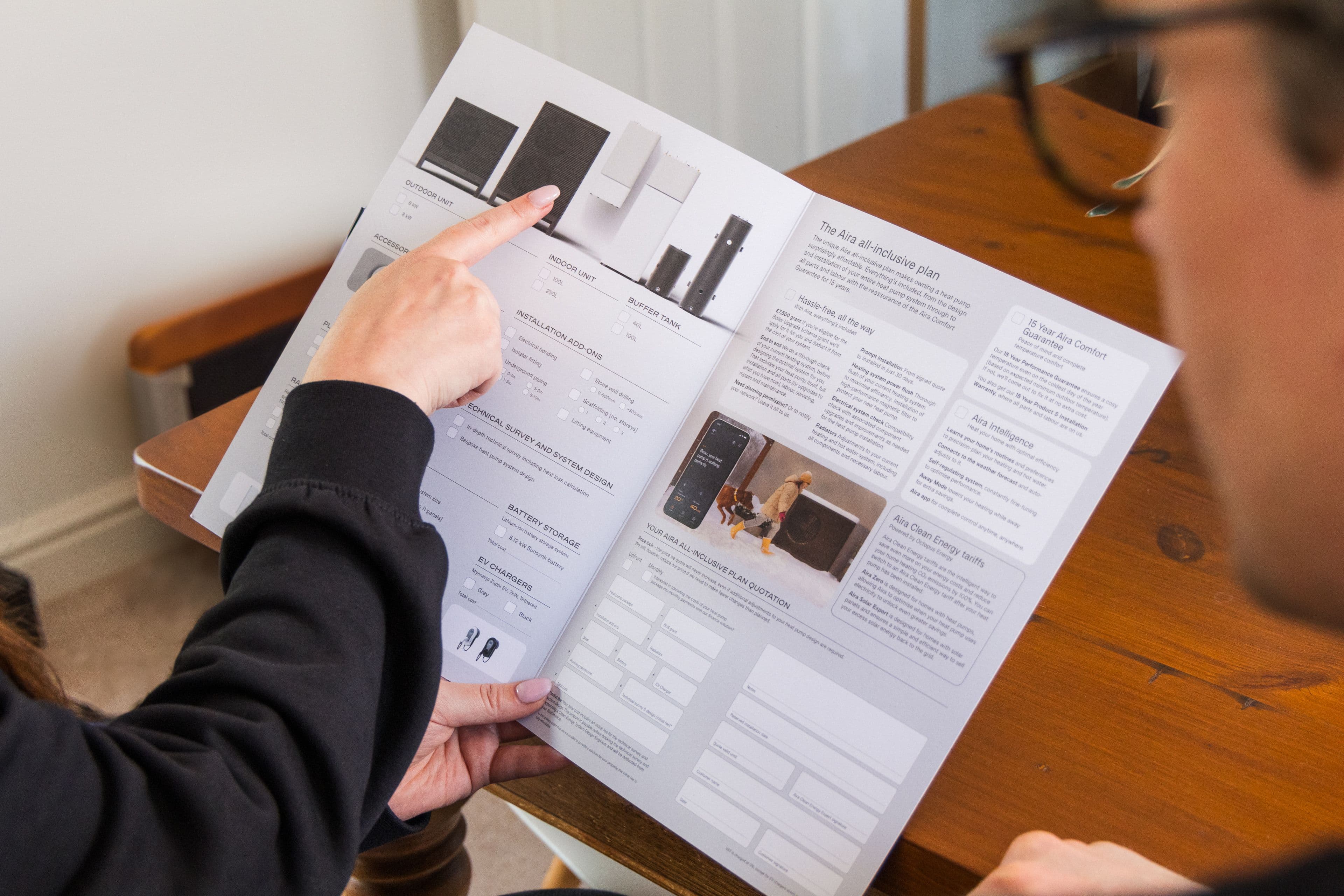
A quick check before you accept a quote
Before you make a decision, take a step back and sense-check what you’ve been given.
A strong heat pump quote should include:
- A clear heat pump model and system size
- Design based on a proper home survey and heat loss calculation
- Details on radiators, pipework, and any required upgrades
- A full installation scope with all materials included
- Smart controls and system monitoring
- Testing, commissioning, and a full handover
- Clear warranty terms and aftercare support
If all of this is clearly explained, you’re likely looking at a well-designed system – not just a number on a page.
What a well-designed heat pump quote looks like in practice
At Aira, every quote starts with a free home energy assessment, followed by a detailed technical survey and full heat loss calculation. From there, we design a system tailored to your home – covering everything from radiator sizing to flow temperature and system performance.
The result is a clear quote with everything included, so you know exactly what to expect from day one.
And we ensure your installation is taken care of by Aira Academy-trained experts. Learn more about what happens during our installations here.
The bottom line
A heat pump quote isn’t just a price. It’s a plan for how your home will be heated for the next 15–20 years.
The best quote won’t always be the cheapest. It’ll be the one that’s been designed properly, explained clearly, and backed by the right level of support.
Take the time to understand what’s included, ask the right questions, and compare properly.
Because when everything is done right, a heat pump doesn’t just heat your home. It changes how it feels to live in.
See how much you could save with an Aira Heat Pump
Answer 4 quick questions to get started.
What type of house do you live in?

Related articles

Heat pumps: The basics
2 Dec 2025
Do heat pumps work in older homes?
Thinking heat pumps are just for new builds? Think again. Many older homes can run a heat pump efficiently and affordably – cutting energy bills, reducing carbon emissions, and future-proofing your home. Just as a heat pump in a newbuild home would.
Costs & benefits
8 Sept 2025
Why install a heat pump when renovating your home?
Renovating is the perfect time to upgrade your heating. With walls open and systems being replaced, it’s easier and less disruptive to install an Aira Heat Pump. So when your build is done, your home is not only refreshed but future-proofed too.